

District Cooling in the UAE: Why Your Clean Apartment Still Blows Warm Air
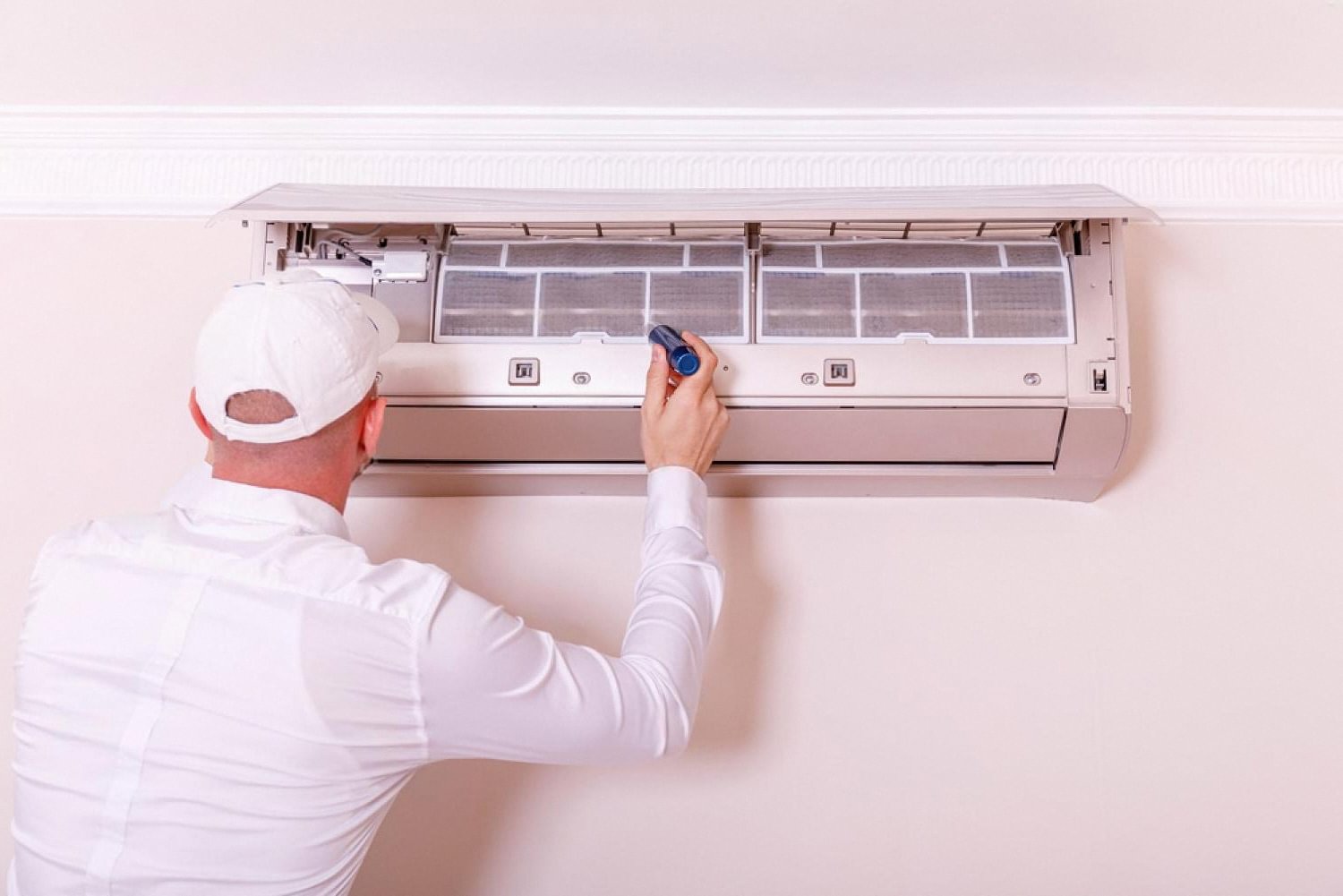
UAE homes
Why your spotless apartment can still blow warm air
You keep the filters clean, you close the blinds, you set the thermostat to 22°C, and the vents still push out something that feels closer to a hair dryer than an air conditioner. In most new UAE buildings the problem isn’t your unit at all. It’s the cooling system that feeds it. If you live in Downtown Dubai, Business Bay, JBR, Reem Island, Yas Island or almost any master-planned community built after 2005, your building is very likely on district coolingand that changes everything about how you troubleshoot a warm apartment.
The basics
District cooling vs. the AC you grew up with
A traditional split unit has an indoor evaporator and an outdoor condenser bolted to your wall. A central AC serves one villa or one floor from a package unit on the roof. Both make cold air on-site. District cooling works differently. A large central plant, sometimes serving an entire district, chills water to around 4-6°C and pumps it through insulated underground pipes to hundreds of buildings. Inside your apartment, that chilled water passes through a Fan Coil Unit (FCU) and your fan blows air across the cold coil. No compressor sits in your flat. You are essentially renting cold water by the ton-hour.
Operators in the UAE include Empower, Emicool, Tabreed and Palm District Cooling. If your monthly utility bill has a separate line for “cooling” measured in RT/hr or TRh, that’s district cooling. If you only see DEWA or ADDC electricity charges, you’re probably on a conventional system.
The trade-offs, at a glance
Pros of district cooling
- Up to 50% more energy-efficient than individual split units, according to the International Renewable Energy Agency.
- No noisy outdoor condenser, no compressor failures inside your home.
- Consistent cooling capacity even on 48°C August afternoons.
- Building facades stay clean, no dripping outdoor units.
- Lower peak load on the national grid, which matters in the UAE summer.
Cons of district cooling
- You cannot fix it yourself. If the plant is down, your apartment is warm.
- Fixed capacity charges apply even if you are away for three months.
- Billing disputes over RT/hr consumption are common in older meters.
- Chilled-water leaks in the building riser can affect several floors at once.
- Weak flow in high-rise upper floors is a recurring complaint.
Tip 1
Find out which system your building actually uses
Most tenants have no idea. Here is how to check in five minutes:
- Look at your monthly bills. A separate invoice from Empower, Emicool, Tabreed or Palm District Cooling means district cooling.
- Check the service cupboard in your apartment. If you see a small heat-exchanger box with two insulated pipes (flow and return) and a BTU meter, that is a district cooling interface.
- Ask the security desk or building management for the “cooling provider” name. They will know.
- No outdoor condenser on your balcony, but you still have vents in the ceiling? Almost certainly district cooling or centralised chilled water.
Once you know the provider, save their 24/7 hotline in your phone. You will need it eventually.
Tip 2
Rule out the problems you can fix yourself
Before you blame the district plant, check the parts inside your apartment. The chilled water can be perfectly cold and you can still get warm air if the FCU or ductwork is dirty. Dubai apartments accumulate fine desert dust remarkably fast, and a clogged coil kills cooling capacity long before the filter looks obviously dirty.
- Thermostat mode. Confirm it is set to “Cool” not “Fan”. Sounds silly, catches people weekly.
- Filter check. Slide out the return-air filter above the FCU. If it is grey, wash it.
- Coil and duct hygiene. A professional ac duct cleaning service every 12-18 months restores airflow and removes the biofilm that builds up on the cold coil in humid coastal air.
- Valve check. The two-way valve on the chilled-water line sometimes sticks. Tap it gently. If the return pipe is warm but the flow pipe is cold, the valve is not opening.
- BTU meter reading. If the meter shows zero consumption while you have the AC on full, the issue is upstream, not in your flat.
Tip 3
What to do when the plant itself is the problem
If your neighbours are also complaining, the fault is with the provider or the building’s chilled-water riser. Typical repair times in the UAE:
- Localised valve or pump issue in the building: 2 to 8 hours.
- Chilled-water leak in a riser: 6 to 24 hours, sometimes longer if a floor has to be drained.
- Plant-side chiller trip: usually 1 to 4 hours, providers keep redundant units running.
- Scheduled annual maintenance: announced in advance, typically 4 to 12 hours in cooler months.
While you wait: close curtains and blinds to block direct sun, switch off heat-emitting appliances (oven, tumble dryer, gaming PC), open windows only at night if temperatures allow, and use standing or ceiling fans. A wet towel on the shoulders sounds primitive but works. If you have small children, elderly relatives, or pets, ask the building for a temporary lobby with backup cooling, most Dubai towers have one, and in extreme cases hotel vouchers have been offered by providers.
What to avoid
Do not try to open the chilled-water valves or the heat exchanger yourself. The pipes carry glycol-treated water under pressure and a burst line will flood your neighbour below in minutes. Do not install a portable AC that vents into your ceiling void, you will push hot air straight into the building return and make things worse for everyone. And do not withhold your cooling bill during an outage without written approval, UAE tenancy contracts treat cooling charges the same as rent, and disputes go through the Rental Dispute Centrenot the provider hotline.
So, which system is “better”?
For a standalone villa in Al Barsha or Al Ain, a well-maintained ducted split system gives you full control and a technician on the phone within an hour. For a 40-storey tower in Dubai Marina, district cooling wins on efficiency, noise, and reliability, provided the operator is a serious one. Neither system is inherently “more reliable”, both fail when maintenance is skipped. The difference is who owns the fix. With a split unit, that’s you. With district cooling, that’s a company you have never met, working from a plant you have never seen.
Knowing which category you fall into is half the battle. The other half is keeping your side of the system, the FCU, filters, and ducts, in genuinely clean condition, so that when the chilled water is cold, your apartment actually feels it.
Frequently asked questions
How can I tell if my UAE apartment is on district cooling?
Check your monthly bills. If you receive a separate invoice from Empower, Emicool, Tabreed or Palm District Cooling, measured in RT/hr or TRh, you are on district cooling. You will also see a small BTU meter and two insulated pipes in your service cupboard, and there will be no outdoor condenser on your balcony.
Why is my apartment warm when the thermostat is set low?
Three usual suspects: a dirty FCU coil or duct restricting airflow, a stuck two-way chilled-water valve, or a supply problem from the district cooling plant. Check whether neighbours have the same issue. If yes, call the provider. If no, the problem is inside your apartment and a coil and duct clean often solves it.
How often does district cooling fail in the UAE?
Unplanned outages at major providers are relatively rare, typically a handful of hours per building per year. Building-level issues (valves, pumps, riser leaks) are more common than plant-side failures. Scheduled maintenance usually happens in winter months when demand is low, and residents are notified in advance.
Do I still have to pay cooling charges when the system is down?
Yes, in most cases. UAE district cooling contracts include a fixed capacity charge that covers your allocated cooling tonnage regardless of consumption. You may be entitled to compensation for extended outages, but you cannot simply withhold payment. Escalate disputes in writing to the provider and, if unresolved, to the Rental Dispute Centre.
Is district cooling cheaper than a split AC in the long run?
The energy consumed per ton of cooling is significantly lower with district cooling, often 30 to 50 percent less. However, your bill includes capacity charges even when you are travelling, so a mostly-empty apartment can end up costing more than a split unit would. For year-round occupied homes in high-rise towers, district cooling almost always wins.
Can I install my own split AC if I don’t like the district cooling in my building?
Almost never. Building bylaws in Dubai and Abu Dhabi prohibit tenants and owners from drilling through facades or altering the cooling infrastructure. You are contractually tied to the district cooling provider for the life of the tenancy. What you can do is optimise the equipment inside your apartment: clean filters, service the FCU annually, and have the ducts professionally cleaned.
How long should I expect repairs to take?
Simple building-level fixes (a stuck valve, a tripped pump) are usually resolved in 2 to 8 hours. Chilled-water leaks or riser work can take up to 24 hours. Plant-side chiller issues are typically fastest because providers run redundant units. Ask for a written ETA every time you call the hotline.